Herniated disc
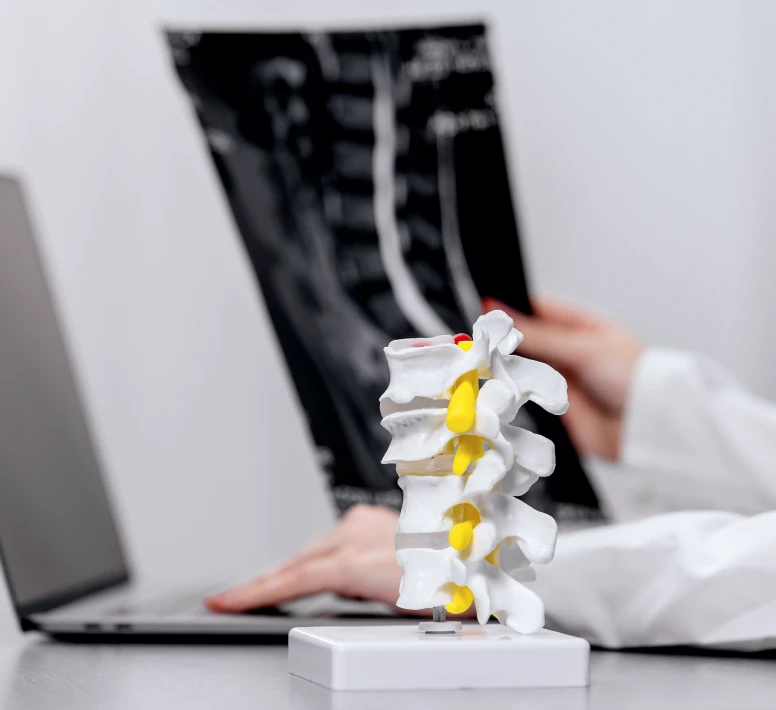
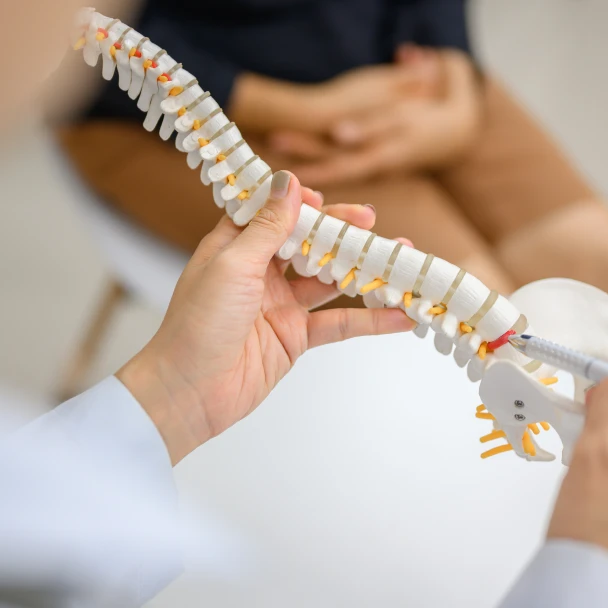
Disc herniation occurs when the gelatinous nucleus of an intervertebral disc is displaced or leaks through its outer layer, putting pressure on nearby nerves. This condition can cause severe pain, numbness or weakness in specific areas, such as the neck, back or extremities, depending on the location of the affected disc.
Trust Dr. Sanmillan
With extensive experience in the treatment of herniated discs, Dr. Sanmillan uses advanced techniques to ensure effective results and rapid recovery. Schedule a consultation to learn how we can help you relieve pain and restore your mobility.
Frequently asked questions
-
Recovery time may vary from case to case, but is generally faster than with traditional open surgery. Many patients are able to resume light activities within a few weeks, depending on the condition treated and their general health.
-
Our level of experience means that we can treat both simple and complex hernias by endoscopic surgery, although each case must be evaluated individually in order to offer the best solution.
-
A lumbar herniated disc occurs when the gel-like core of an intervertebral disc protrudes through tears in its outer layer, putting pressure on the nerves in the lumbar spine. This displacement can cause lower back pain, pain radiating down the legs (sciatica), and muscle weakness.
The lumbar spine supports most of your body weight, which is why herniated discs are so common in this area. Natural wear and tear (disc degeneration), injuries, poor posture, and repetitive movements are among the most common causes of a lumbar disc herniation.
-
The symptoms of a lumbar herniated disc vary depending on its severity and location:
- Acute or chronic lower back pain in the lumbar region.
- Pain radiating to the buttocks and legs, known as sciatica, especially if the sciatic nerve is compressed.
- Numbness or tingling in the legs or feet.
- Muscle weakness in the lower extremities.
- Difficulty walking, bending, or maintaining prolonged positions.
- Loss of bladder or bowel control in severe cases.
If you experience severe pain or neurological symptoms, it is important to consult a spine neurosurgeon for an accurate diagnosis through MRI or CT imaging.
-
The diagnosis of a lumbar herniated disc combines clinical evaluation and imaging tests:
Clinical evaluation:
- Review of your medical history and symptoms.
- Neurological tests to assess strength, sensation, and reflexes.
- Specific tests such as the Lasègue test to detect nerve compression.
Imaging tests:
- Magnetic resonance imaging (MRI): the most accurate test to assess the condition of the disc and nerve compression.
- Computed tomography (CT scan): useful when there are contraindications for MRI.
- Plain X-rays: used to rule out other bone-related conditions.
Once the lumbar disc herniation is confirmed by MRI, the specialist can determine its exact type, size, and location, which is essential for choosing the most appropriate treatment.
“`
-
The treatment of a lumbar herniated disc depends on the severity of the condition, the symptoms experienced, and the patient’s response to initial conservative treatment.
Conservative treatment (first-line approach):
- Relative rest and postural adjustments.
- Anti-inflammatory medications and pain relievers to manage symptoms.
- Physical therapy specialized in the lumbar spine.
- Epidural steroid injections to reduce inflammation and relieve pain.
- Stretching and strengthening exercises tailored to the patient’s needs.
Surgical treatment (when conservative treatment is unsuccessful):
- Lumbar microdiscectomy: a minimally invasive procedure to remove the portion of the disc compressing the nerve.
- Decompressive laminectomy: a procedure that enlarges the spinal canal and relieves pressure on the nerves.
- Spinal fusion: stabilization of the vertebrae when spinal instability is present.
Most lumbar herniated discs (approximately 70% to 90%) respond well to conservative treatment within 6 to 12 weeks. Surgery is generally considered when pain persists for more than six months, progressive neurological deficits develop, or bladder and bowel function are affected.
-
The recovery time for a lumbar herniated disc varies depending on the type of treatment and the severity of the condition.
With conservative treatment:
- Most patients begin to notice improvement within 2 to 4 weeks.
- Full recovery typically occurs within 6 to 12 weeks.
- Some cases may require a longer recovery period if there is significant nerve damage.
After endoscopic spine surgery for a lumbar herniated disc:
- Initial recovery: 2 to 4 weeks.
- Return to light activities: 6 to 8 weeks.
- Complete functional recovery: 3 to 6 months.
Adhering to a physical therapy program, following postural recommendations, and gradually increasing activity levels can significantly accelerate recovery from a lumbar disc herniation. During the early stages, it is essential to avoid movements that reproduce or worsen the pain.
-
No. Surgery for a lumbar herniated disc is generally considered a last resort rather than the first treatment option. Between 70% and 90% of patients with a lumbar disc herniation improve with conservative treatment and do not require surgery.
Surgery may be recommended when:
- Pain or neurological symptoms persist for more than 6 to 8 weeks despite conservative treatment.
- There is a progressive neurological deficit, such as worsening muscle weakness.
- Multiple nerve roots are compressed, resulting in cauda equina syndrome.
- There is a loss of bladder or bowel control.
- The patient’s quality of life is severely affected.
When Is Conservative Treatment Enough?
In most cases, a combination of specialized physical therapy, guided therapeutic exercise, postural correction, and anti-inflammatory medication can successfully relieve symptoms and promote recovery from a lumbar herniated disc without the need for minimally invasive spine surgery.
-
Exercise plays a key role in the treatment of a lumbar herniated disc, but it must be tailored to the patient’s condition and introduced progressively.
Initial phase (first 2 weeks – acute pain):
- Short, slow walks that do not reproduce symptoms.
- Gentle stretching exercises performed while lying down.
- Controlled diaphragmatic breathing exercises.
- Avoid trunk flexion and twisting movements.
Intermediate phase (2 to 6 weeks):
- Core stabilization exercises.
- Progressive strengthening of the gluteal and abdominal muscles.
- Controlled lumbar extension exercises.
- Hip mobility exercises.
Advanced phase (after 6 weeks):
- More challenging strength-training exercises.
- Progressive return to functional activities.
- Gradual resumption of normal daily activities.
What Should Be Avoided with a Lumbar Herniated Disc?
- Forward bending of the trunk.
- Deep squats during the early stages of recovery.
- Lifting weights without proper postural control.
- Any movement that causes sharp or intense pain.
It is essential to work with a physical therapist experienced in lumbar disc herniations to develop an individualized exercise program based on your specific symptoms, physical condition, and stage of recovery.
-
Although it is not possible to prevent a lumbar herniated disc completely, several effective strategies can significantly reduce the risk of developing this condition.
Ergonomics and posture:
- Maintain a straight back while sitting and use lumbar support when needed.
- Position your computer screen at eye level to avoid unnecessary strain on the spine.
- Lift heavy objects correctly by bending your knees, not your back.
- Avoid sudden twisting movements of the lumbar spine.
Strength and flexibility:
- Engage in regular exercise focused on strengthening the core and back muscles.
- Perform daily stretching exercises for the hip flexors and hamstrings.
- Practice low-impact cardiovascular activities such as walking or swimming.
Healthy lifestyle habits:
- Maintain a healthy body weight to reduce stress on the spine.
- Avoid smoking, as it can impair blood flow and nutrient supply to the intervertebral discs.
- Sleep in a neutral position, preferably on your side with a pillow between your knees.
- Use a mattress and pillow that provide adequate spinal support.
At work:
- Change position at least every 30 minutes.
- Use an ergonomic chair suited to your workstation.
- If you spend long periods standing, consider wearing supportive footwear or orthotic insoles.
Although factors such as age and genetics can increase the risk of developing a lumbar disc herniation, adopting these preventive habits can significantly reduce the likelihood of experiencing this condition.
-
If you suspect you may have a lumbar herniated disc, the typical care pathway usually includes the following steps:
Step 1: Your Primary Care Physician
- Initial evaluation of your symptoms.
- Assessment to rule out other causes of lower back pain.
- Referral to a specialist if necessary.
Step 2: Relevant Specialists
- Orthopedic Surgeon: specializes in musculoskeletal conditions affecting bones, joints, and the spine.
- Neurosurgeon: specializes in spinal disorders and nerve-related conditions, including spinal surgery.
- Neurologist: may be involved when neurological symptoms, such as sciatica, are predominant.
- Physical Medicine and Rehabilitation Physician (Physiatrist): focuses on conservative treatment and rehabilitation strategies.
Step 3: Specialized Physical Therapist
- Plays a key role in the conservative management of a lumbar disc herniation.
- Evaluates posture, movement patterns, and functional limitations.
- Develops a personalized rehabilitation and exercise program.
When Should You Seek Emergency Care?
If you experience symptoms of cauda equina syndrome, such as loss of bladder or bowel control, progressive weakness in both legs, or severe and unbearable lower back pain, you should seek emergency medical attention immediately.
Most lumbar herniated discs are initially managed by a primary care physician and a physical therapist, with referral to a specialist reserved for more complex cases or when symptoms do not improve with conservative treatment.
-
Yes, a lumbar herniated disc can recur after symptoms have improved. However, the risk of recurrence can be significantly reduced through proper rehabilitation, healthy lifestyle habits, and long-term preventive measures.
Recurrence rates:
- After conservative treatment: approximately 5% to 15% within 5 years.
- After microdiscectomy surgery: approximately 5% to 20% within 5 years.
- After spinal fusion: there is a lower risk of recurrence at the treated level, although adjacent spinal segments may experience increased stress over time.
Factors that increase the risk of recurrence:
- Returning too quickly to strenuous physical activities.
- Poor posture and inadequate ergonomics.
- Smoking.
- A sedentary lifestyle or persistent weakness of the core muscles.
- Physically demanding work performed without proper body mechanics or protection.
How Can You Prevent a Recurrence of a Lumbar Herniated Disc?
- Continue physical therapy exercises even after symptoms have resolved.
- Maintain proper posture and ergonomic habits long term.
- Avoid movements and activities that contributed to the original injury.
- Perform core strengthening exercises 3 to 4 times per week.
- Maintain a healthy body weight.
- Avoid smoking.
Most recurrences of a lumbar disc herniation occur within the first year after recovery. Long-term adherence to preventive measures and a regular exercise program can significantly reduce the likelihood of recurrence.
Other pathologies


Make an appointment
Fill out the form below and we will contact you as soon as possible.Fill out the form below and we will contact you as soon as possible.