

All about cervical disc herniation surgery: Procedure and recovery time
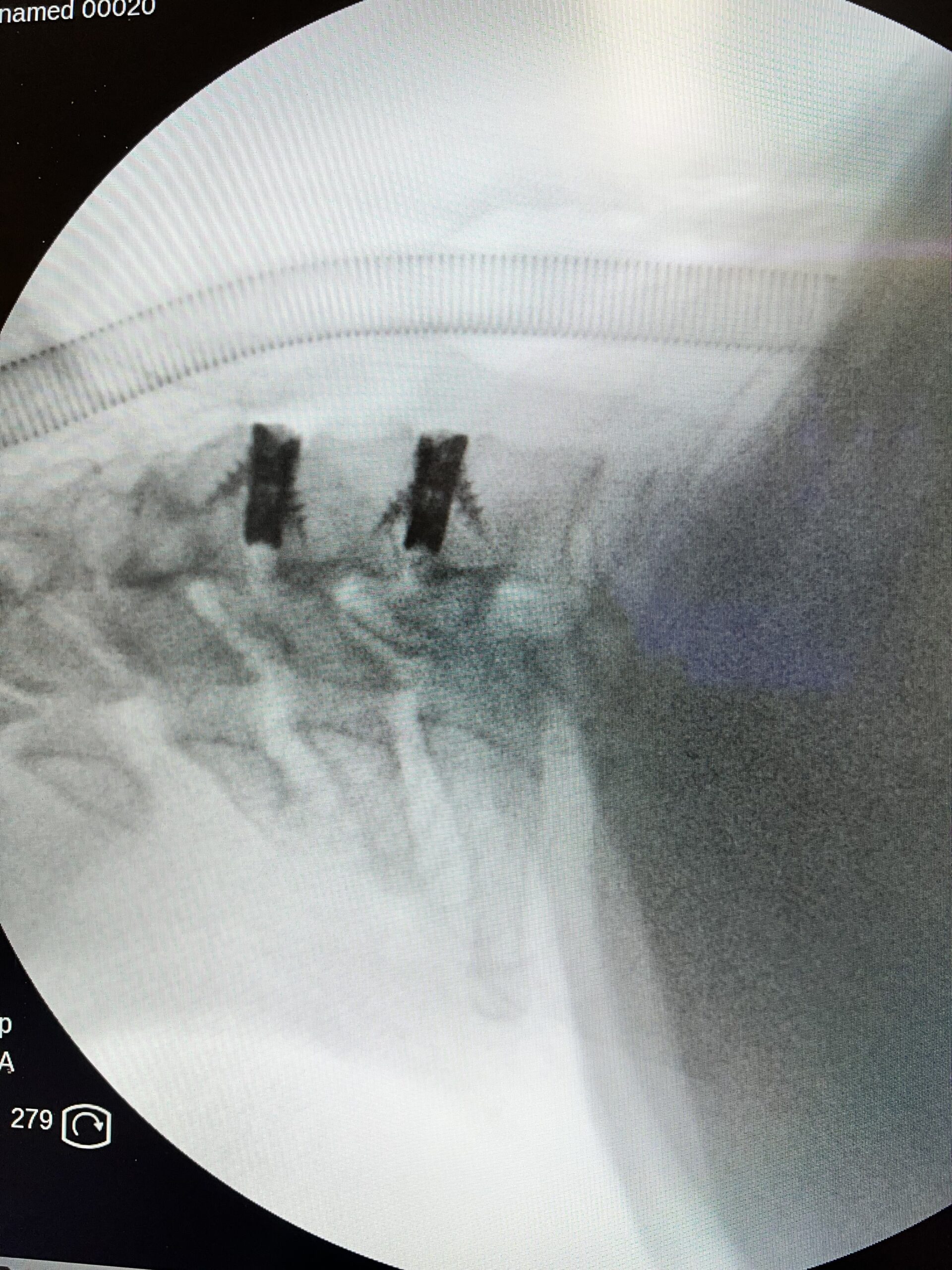
Cervical disc herniation is one of the most common causes of neck pain radiating to the arm, tingling, loss of strength, or functional limitation in daily life. When conservative treatment fails to relieve symptoms or neurological signs appear, cervical disc herniation surgery may become the best therapeutic option.
In recent years, cervical surgery has evolved significantly, offering safer, more precise, and less invasive techniques, with increasingly faster recovery times. However, not all surgeries are the same, and not all patients require the same procedure.
When is cervical disc herniation surgery indicated?
Most cervical disc herniations are initially treated conservatively with medication, physiotherapy, or injections. Surgery is considered when:
- Pain persists despite appropriate treatment
- There is loss of strength, sensation, or reflexes
- Spinal cord involvement appears
- The patient’s quality of life is clearly limited
The choice of surgical technique depends on multiple factors: the location of the herniation, the patient’s age, disc condition, cervical alignment, and activity level, among others.
Main types of surgery for cervical disc herniation
1. Anterior cervical discectomy and fusion (ACDF)
Anterior cervical fusion is one of the most established and commonly used procedures. It involves accessing the cervical spine from the front of the neck, removing the damaged disc, and decompressing the nerve or spinal cord. An implant is then placed to fuse the affected vertebrae.
Advantages:
- Proven and effective technique
- High rate of pain relief
- Good long-term stability
Points to consider:
- Loss of mobility at the operated segment
- Increased load on adjacent discs over time
2. Cervical disc arthroplasty (disc replacement)
Cervical arthroplasty, or replacement of the disc with a mobile prosthesis, is an alternative to fusion in selected patients. The goal is to remove the herniation while preserving motion at the cervical segment.
Advantages:
- Maintains natural neck movement
- Reduces the risk of degeneration at adjacent levels
- Typically faster functional recovery
Points to consider:
- Not indicated for all patients
- Requires specific anatomical and clinical criteria
3. Endoscopic cervical foraminotomy
Endoscopic cervical foraminotomy is a minimally invasive technique that allows decompression of the affected nerve without removing the entire disc or fusing the vertebrae. It is usually performed via a posterior approach with very small incisions.
Advantages:
- Preserves the disc and mobility
- Less muscle damage
- Less postoperative pain
- Faster recovery
Points to consider:
- Mainly indicated for lateral or foraminal herniations
- Requires high expertise in endoscopic cervical surgery
What is recovery like after cervical herniation surgery?
Recovery time after cervical disc herniation surgery depends on the type of procedure performed, the patient’s prior condition, and their usual activity level. In general:
- Improvement in radiating pain is often rapid
- Early mobilization is possible with most modern techniques
- Return to daily activities may occur within a few weeks
- Return to sports or physically demanding work is individualized
Minimally invasive surgery and endoscopic spine surgery techniques allow many patients a smoother, more gradual recovery, with less impact on the cervical musculature.
Which surgery is best for me?
There is no single correct answer for all patients. The best cervical disc herniation surgery is the one that:
- Effectively treats the cause of pain
- Preserves healthy structures as much as possible
- Adapts to the patient’s characteristics and lifestyle
For this reason, a specialized evaluation, a clear explanation of the available options, and shared decision-making between doctor and patient are essential.
Modern cervical surgery: precision, safety, and personalization
Cervical disc herniation surgery has advanced toward increasingly personalized, less invasive procedures with better functional outcomes. Thanks to technological development and surgical specialization, it is now possible to treat many cervical herniations with minimal impact on mobility and quality of life. At our clinic, we work with the best neurosurgeons in Barcelona to offer the highest-quality services and solutions to our patients.

Dr Sanmillán
Collegiate number 080845986
Highly specialized neurosurgeon, with more than 10 years of experience in minimally invasive techniques and extensive experience in endoscopic surgery and endoscopic spine procedures.