

Lumbar facet joint osteoarthritis: what is it and how is it treated?
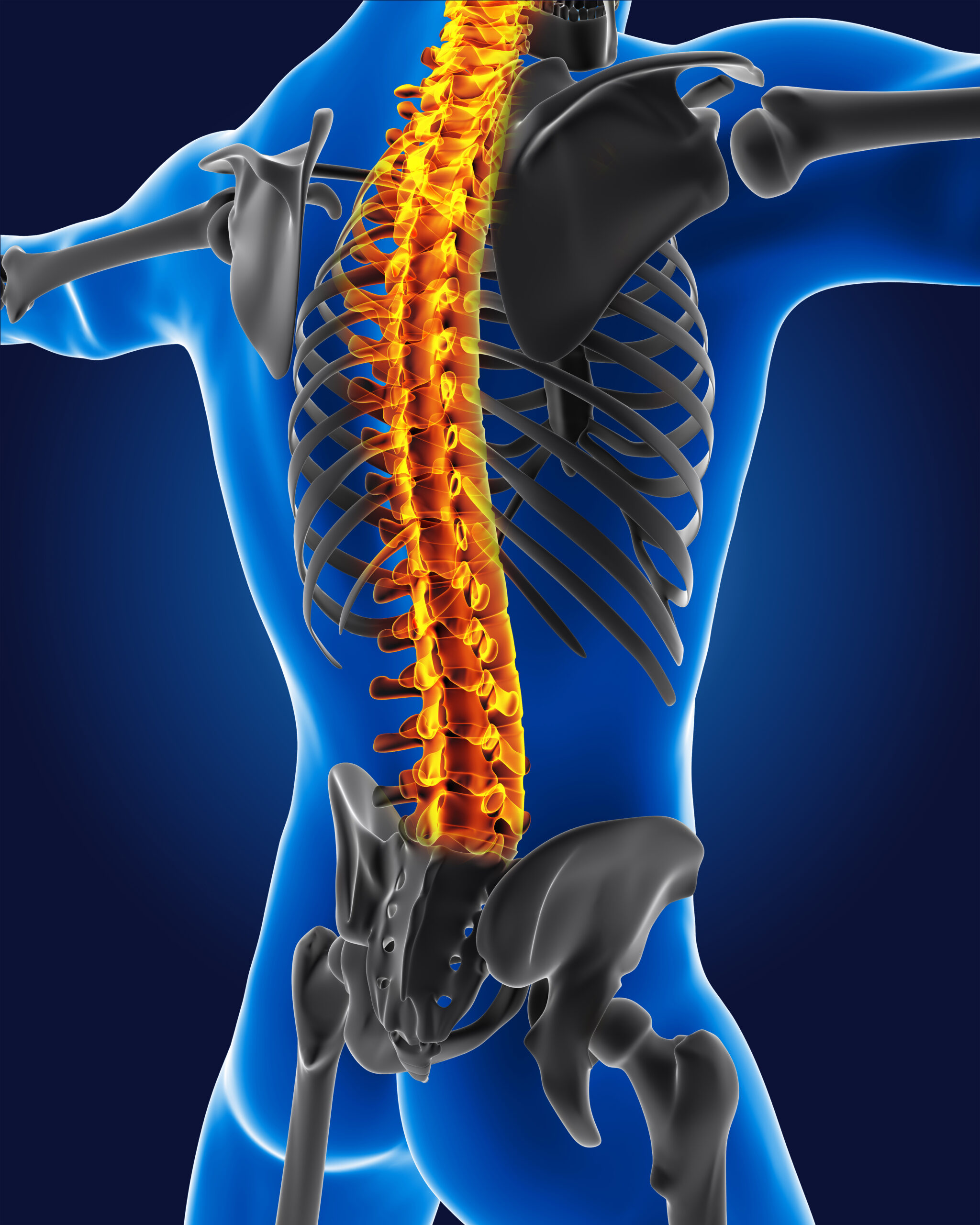
Low back pain is one of the most common reasons for medical consultation. Among the different causes of this pain, one of the least known to patients is lumbar facet syndrome, a degenerative condition that affects the small joints of the spine.
Although it can be quite bothersome and even limit daily life, today there are effective and minimally invasive treatments that help control pain and improve back function.
What is lumbar facet syndrome?
The spine is not made up of intervertebral discs alone. It also has small posterior joints called facet joints, which connect the vertebrae to one another and allow spinal movement while maintaining stability.
Over time, natural wear or certain types of overload can cause degeneration of the cartilage in these joints, a condition known as facet syndrome.
This degenerative process can cause inflammation, stiffness and pain in the lumbar area.
Most common symptoms
Lumbar facet syndrome often presents with symptoms that can be confused with other back problems. The most common include:
- Localized lower back pain, which tends to worsen with prolonged standing or walking
- Stiffness in the lower back, especially in the morning
- Pain that increases when extending the back backward
- Discomfort after sitting for long periods or when standing up
- In some cases, pain radiating to the buttocks or thighs
Unlike sciatica caused by a herniated disc, facet pain tends to be more localized and mechanical.
Diagnosis
Diagnosing facet syndrome is based on several elements:
- Patient’s clinical history
- Physical examination
- Imaging tests such as MRI or CT scan
In many cases, the diagnosis is confirmed through diagnostic facet blocks, which involve injecting anesthetic into the affected joint to check whether the pain temporarily disappears.
Treatment for lumbar facet syndrome
Treatment depends on the degree of degeneration and the intensity of symptoms. Most patients start with conservative measures and interventional treatments.
Facet blocks
Facet blocks are one of the most widely used treatments for this condition.
They involve injecting anti-inflammatory and anesthetic medication directly into the affected joint or the nerves that transmit pain. They are performed under radiological guidance to ensure maximum precision.
Their goals are:
- Reduce inflammation
- Relieve pain
- Confirm the facet origin of symptoms
In many patients, these procedures allow for significant pain relief and facilitate functional recovery together with physiotherapy.
PRP treatment (platelet-rich plasma)
In recent years, the use of PRP, or platelet-rich plasma, has gained prominence — a regenerative therapy obtained from the patient’s own blood.
PRP contains growth factors that can help:
- Reduce inflammation
- Support tissue repair
- Improve pain in degenerated joints
When applied to the facet joints, it can be an interesting alternative for patients with persistent pain who wish to avoid more aggressive treatments.
Vertebral stabilization in advanced cases
When facet degeneration is very advanced and associated with vertebral instability or severe wear, surgical treatment may be necessary.
In these cases, the goal is to stabilize the affected vertebral segment, achieved through fixation techniques that eliminate painful movement between the vertebrae.
Today, many of these surgeries are performed using minimally invasive techniques, reducing surgical impact and promoting faster recovery.
Treatment tailored to each patient
Lumbar facet syndrome isn’t treated the same way in every patient. The choice of treatment depends on multiple factors:
- Patient’s age and activity level
- Degree of degeneration
- Pain intensity
- Response to previous treatments
For this reason, a specialized spinal evaluation is essential to determine the best therapeutic strategy.
Frequently Asked Questions About Lumbar Facet Syndrome
-
Minimally invasive open surgery is indicated in patients with complex spinal conditions, such as large herniated discs, severe canal stenosis, vertebral fractures or deformities that cannot be resolved by fully endoscopic techniques.
-
Recovery time may vary from case to case, but is generally faster than with traditional open surgery. Many patients are able to resume light activities within a few weeks, depending on the condition treated and their general health.
-
This technique offers multiple benefits, such as less postoperative pain, faster recovery, lower risk of complications, smaller scars and greater precision in the treatment of complex spinal conditions.
-
Yes, if not properly treated, facet syndrome can progress, increasing inflammation and pain, which can further limit mobility. It is important to seek early medical attention to prevent complications and preserve spinal function.
-
This technique offers multiple benefits, such as less postoperative pain, faster recovery, lower risk of complications, smaller scars and greater precision in the treatment of complex spinal conditions.
-
Recovery time may vary from case to case, but is generally faster than with traditional open surgery. Many patients are able to resume light activities within a few weeks, depending on the condition treated and their general health.

Dr Sanmillán
Collegiate number 080845986
Highly specialized neurosurgeon, with more than 10 years of experience in minimally invasive techniques and extensive experience in endoscopic surgery and endoscopic spine procedures.