

Dr. José Luis Sanmillán at the WFSE World Congress of Spinal Endoscopy Surgery
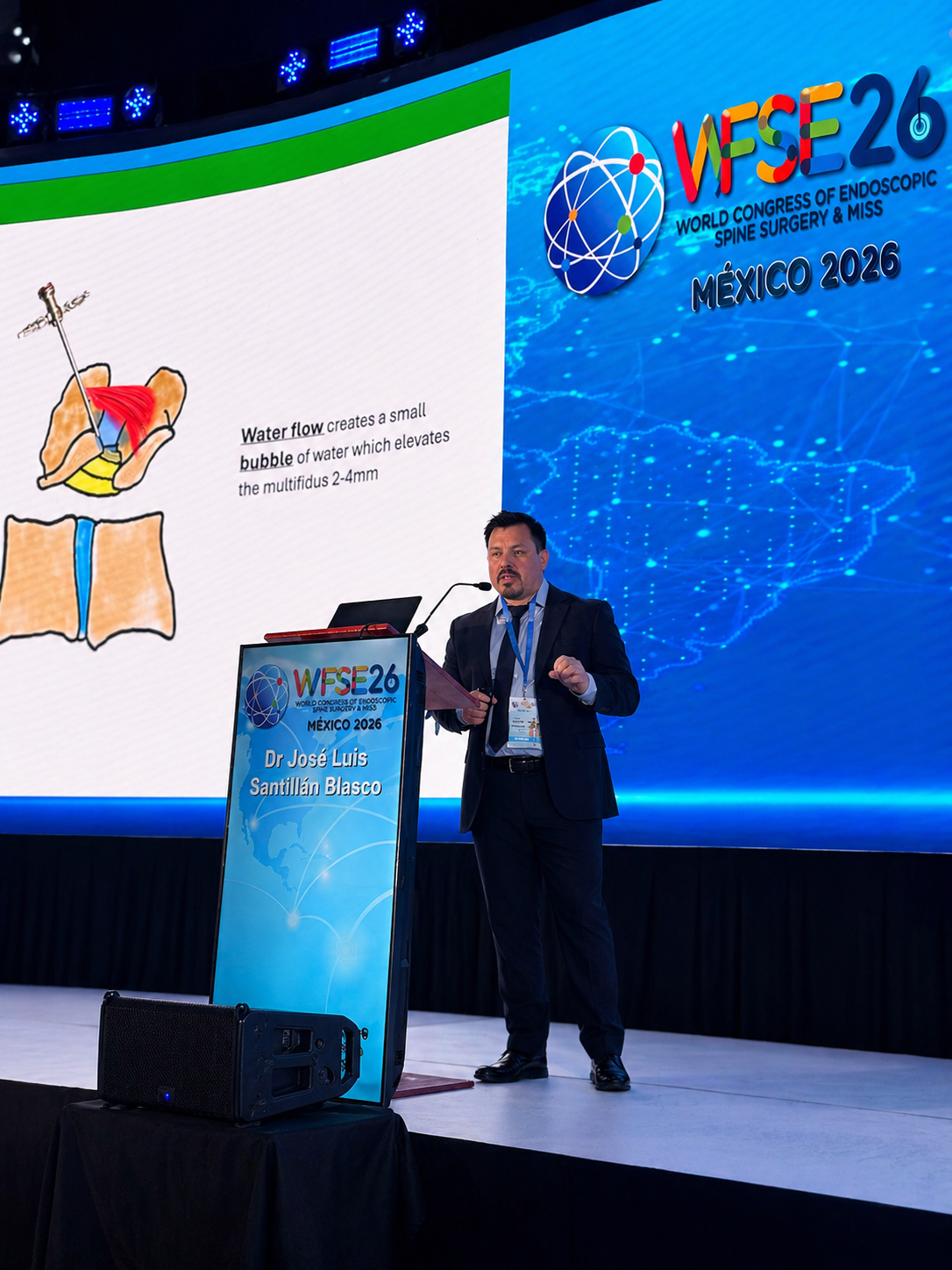
The international meeting, organized by the World Congress of Spinal Endoscopy and MISS, brought together spine surgeons from around the world to share advances, clinical experience, and new technologies in endoscopic and minimally invasive surgery.
Dr. José Luis Sanmillán participated in the World Congress of Spinal Endoscopy, organized by the World Congress of Spinal Endoscopy and MISS —WFSE—, held from May 15 to 18 in Tulum, Mexico.
The congress brought together international spine surgery specialists with the aim of sharing knowledge, analyzing the evolution of endoscopic techniques, and discussing the growing role of minimally invasive surgery in the treatment of spinal disorders.
Dr. Sanmillán’s participation in this event reinforces his commitment to continuous training, surgical innovation, and the development of advanced techniques aimed at improving the treatment of patients with lower back pain, sciatica, disc herniations, spinal stenosis, and foraminal lesions.
Two presentations focused on the evolution of endoscopic spine surgery
During the congress, Dr. Sanmillán delivered two presentations related to key aspects of modern endoscopic surgery.
The first focused on the learning curve in endoscopic spine surgery, a fundamental issue in the safe expansion of these techniques. Endoscopic surgery requires specific training, a precise understanding of anatomy, and a gradual adaptation to a different way of visualizing and treating spinal lesions.
Discussing the learning curve not only involves analyzing the acquisition of technical skills, but also reflecting on how to introduce these techniques in an organized, safe, and reproducible way. At a time when spinal endoscopy is gaining presence in hospitals and specialized units around the world, these types of discussions are essential to ensure rigorous, patient-centered surgical practice.
The second presentation focused on the endoscopic paraspinal approach, a special access route that allows the treatment of certain lesions located in the foraminal region of the spine.
Foraminal lesions affect the area where nerve roots exit the spinal canal. When compression exists in this region, patients may experience radiating pain, sciatica, loss of strength, or functional limitations. The paraspinal approach provides more direct access to these areas in selected cases, expanding treatment possibilities through endoscopic and minimally invasive techniques.
Technological advances: surgical neuronavigation and robotic surgery
In addition to the scientific presentations, Dr. Sanmillán participated in the presentation of a workshop developed together with Brainlab AG, focused on surgical neuronavigation and robotic surgery applied to spine surgery.
The incorporation of advanced technology into the operating room is transforming the planning and execution of many procedures. Neuronavigation makes it possible to work with precise anatomical references, improve orientation during surgery, and facilitate certain complex approaches. Robotic surgery, meanwhile, represents a complementary tool in the development of increasingly precise and carefully planned procedures.
In the context of endoscopic and minimally invasive surgery, these technologies can play an important role in improving the safety, precision, and reproducibility of treatments, always within an appropriate and personalized surgical indication.
An international meeting to define the present and future of spine surgery
The WFSE World Congress of Spinal Endoscopy brought together surgeons from different countries in Tulum, consolidating itself as a space for scientific and professional exchange around one of the fastest-growing areas within spine surgery.
The presence of specialists from around the world made it possible to share experiences, compare techniques, review outcomes, and discuss the current challenges of endoscopic surgery. These types of meetings help define standards, improve surgeon training, and bring increasingly less invasive treatments closer to patients.
For Dr. Sanmillán, being part of this congress represents an opportunity to remain connected with the leading international advances in spine surgery and to actively contribute to the development of techniques that are changing the way many spinal disorders are treated.
Commitment to minimally invasive surgery and innovation
Dr. José Luis Sanmillán’s participation in the WFSE World Congress of Spinal Endoscopy is part of a professional career focused on advanced spine surgery, especially in the development of endoscopic surgery and minimally invasive approaches.
His presence at international forums such as this reflects a clear commitment to continuous updating, collaboration with leading teams, and the progressive incorporation of technologies that allow more precise, personalized treatments adapted to the needs of each patient.
Endoscopic spine surgery continues to evolve and expand its indications. Congresses such as the one held in Tulum make it possible to share knowledge, analyze results, and continue advancing toward less aggressive, more precise spine surgery focused on improving patient recovery.
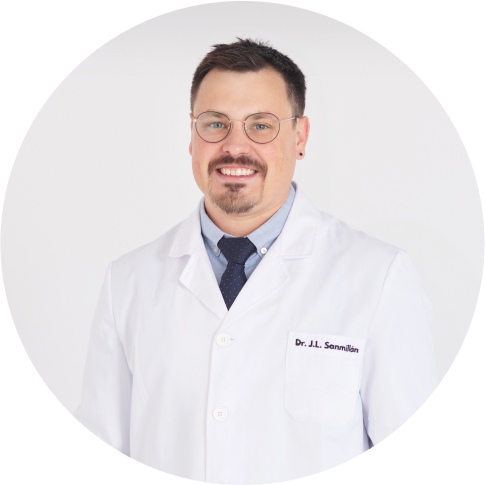
Dr Sanmillán
Collegiate number 080845986
Highly specialized neurosurgeon, with more than 10 years of experience in minimally invasive techniques and extensive experience in endoscopic surgery and endoscopic spine procedures.